
 Printer Friendly / Create PDF
WasteCare Corporation is your source for commercial trash compactors, balers, waste equipment, recycling equipment, industrial shredders and grinders, and other waste related products and services.
Home > Sitemap > Compactors >
FLUORESCENT BULB CRUSHERS / LAMP COMPACTORS
SAVE UP TO 50% ON
RECYCLING / DISPOSAL COSTS; 80% ON STORAGE SPACE, AND
ROUGHLY 20 LABOR HOURS
FOR EVERY 1,000 BULBS THAT ARE CRUSHED VERSUS BOXED
Straight, U-Shaped & CFL Bulbs
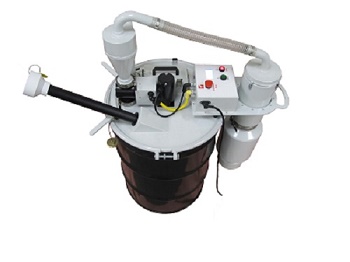
Straight and U-Shaped Fluorescent Bulbs
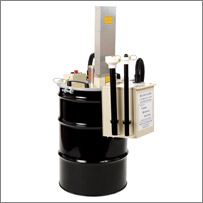
There are 10 states in which these types of Bulb Crushers are not allowed: (It has nothing to do with the Bulb Crusher but rather these States have just not approved this type of Bulb Crushing in general.)
CA, CT,
MO, ME, MN, NH, PA, RI, VT, WV
Read about Recycling Fluorescent Bulbs
Request Automated Response with general pricing - (Secure) Select model below:
PRE-1700 -
Click Here
-
Straight, U-Shaped & CFL's
FLP-1400 - Click Here
- Straight & U-Shaped
CFL-1502 - Click Here
- Straight & CFL's
For other types of Bulb Crushers Click Here
Request Info On Multiple Products - (Secure Area)
Fluorescent Bulb or Lamp Crushers / Compactors & Recycling Program
All Bulb Crusher Models provide emission control to help create the safest work environment possible, while packaging spent bulbs or lamps! All Models utilize 55 Gallon Drum containers as a means of collection and all models include a system designed to filter both dust and mercury vapor.
Incorporated into the the bulb (or lamp) crusher is a side-mounted dust filter unit containing the highest quality H.E.P.A. filter available. The H.E.P.A. filter works in conjunction with an activated carbon filter located in the steel canister. The activated carbon filter actively captures and neutralizes the mercury vapor released from the lamps during lamp crushing.
Note: States where the services for getting pick-ups / hauling of the Crushed Bulbs is easiest is below:
AL, AR, AZ, CO, DC, FL. GA, IA, IL, IN, KY. LA, MA, MD, MS, NJ, NY, OH, TN, TX, VA
The areas / States that may be the most difficult are Pacific NW (excluding Metro Seattle); the Rockies (exclusing metro Denver); the Dakotas, and the plains (excluding urban areas in KS and OK
|
Fluorescent Bulb or Lamp Crushers / Compactors
- 3 Models
|
BULB CRUSHER PRE-1700
Premium -
Does Straight, U-Shaped and CFL's - (With Control Panel and Feed
Chute) |
||
| ETL Certified | UL 73; 10 UL Standard for Safety for Motor Operated Appliances; CAN/CSA C22.2 No.68; ED: 7 Motor Operated Appliances | |
| Feed Rate | 30 lamps per minute (Operators Speed May Vary) | |
| Filtration | ||
| Stage 1 | Industrial Grade Bag Filter (Replace twice per drum) | 1 micron @ 99% particle retention |
| Stage 2 | H.E.PA. Filter (Replace every 10 drums) | .3 micron @ 99.99% particle retention (Exceeds H.E.P.A. standard @ 99.97% |
| Stage 3 | Activated Carbon Filter (Lifetime capacity - calculated life of 1 million Bulbs / Lamps or approximately 1500 hours running time) | 0.00005 mg/m3 of mercury vapor1 at exhaust (Exceeds OSHA standard of 0.1 mg/m3) |
| Exposure in Operator's Breathing Zone | 0.00005 mg/m3 of mercury vapor1 (Exceeds OSHA standard of 0.1 mg/m3) | |
| Crushed Lamp Capacity | ||
| 1500 | 4' T5 Straight Bulbs / Lamps (.0625" diameter) per drum | |
| 1350 | 4' T8 Straight Bulbs / Lamps (1.0" diameter) per drum | |
| 875 | 4' T12 Straight Bulbs / Lamps (1.5" diameter) per drum | |
| 300 | 4' T17 Straight Bulbs / Lamps (2.0" diameter) per drum | |
| 400 | 8' T12 Straight Bulbs / Lamps (1.5" diameter) per drum | |
| 550 | 4' T12 U-Tube Bulbs / Lamps (1.5" diameter) per drum | |
| Vacuum | 4 0 c.f.m - 5.5 amps | |
| Motors: | Main: 1/5 HP 120v UL Listed | |
| Includes: Control Panel; 45 Degree Feed; 10 Drum Filter Kit & T12 Entry Tube | ||
BULB CRUSHER FLP-1400-U -
Standard U-Shaped & Straight Bulbs
- (With Control Panel and 45 degree angle Feed
Chute) |
||
| Feed Rate | 20 lamps per minute (Operators Speed May Vary) | |
| Filtration | ||
| Stage 1 | Industrial Grade Bag Filter (Replace twice per drum) | 1 micron @ 99% particle retention |
| Stage 2 | H.E.PA. Filter (Replace every 10 drums) | .3 micron @ 99.99% particle retention (Exceeds H.E.P.A. standard @ 99.97% |
| Stage 3 | Activated Carbon Filter (Lifetime capacity - calculated rating of 1 million Bulbs / Lamps) | 0.00005 mg/m3 of mercury vapor1 at exhaust (Exceeds OSHA standard of 0.1 mg/m3) |
| Exposure in Operator's Breathing Zone | 0.00005 mg/m3 of mercury vapor1 (Exceeds OSHA standard of 0.1 mg/m3) | |
| Crushed Lamp Capacity | ||
| 1350 | 4' T8 Straight Bulbs / Lamps (1.0" diameter) per drum | |
| 800 | 4' T12 Straight Bulbs / Lamps (1.5" diameter) per drum | |
| 300 | 4' T17 Straight Bulbs / Lamps (2.0" diameter) per drum | |
| 450 | 4' T12 U-tube Bulbs / Lamps (1.5" diameter) per drum | |
| 400 | 8' T12 Straight Bulbs / Lamps (1.5" diameter) per drum | |
| Vacuum | 40 c.f.m - 5.5 amps | |
| Motors: | Main: 1/5 HP 120v UL Listed | |
| Includes: Control Panel; 45 Degree Feed; U-Tube Feed Chute; 10 Drum Filter Kit & T12 Entry Tube | ||
(Model CFL-1502 - 220v - For International Purchases)
BULB CRUSHER
CFL-1502
- CFL
(220V) -
CFLs & Straight Bulbs (With Control Panel) Does not do U-Shaped Bulbs - For International Sales only (Not sold for Domestic Use) |
||
| Feed Rate | 20 lamps per minute (Operators Speed May Vary) | |
| Electrical / Motor: | Main: 1/6 HP 220v UL Listed - Vacuum: 5.5 amps | |
| Filtration | ||
| Stage 1 | Industrial Grade Bag Filter (Replace twice per drum) | 1 micron @ 99% particle retention |
| Stage 2 | H.E.PA. Filter (Replace every 10 drums) | .3 micron @ 99.99% particle retention (Exceeds H.E.P.A. standard @ 99.97% |
| Stage 3 | Activated Carbon Filter (Lifetime capacity - calculated rating of 1 million Bulbs / Lamps) | 0.00005 mg/m3 of mercury vapor1 at exhaust (Exceeds OSHA standard of 0.1 mg/m3) |
| Exposure in Operator's Breathing Zone | 0.00005 mg/m3 of mercury vapor1 (Exceeds OSHA standard of 0.1 mg/m3) | |
| Crushed Lamp Capacity | ||
| 3,000 | CFL'S / Compact Fluorescent Bulbs / Lamps (per drum) | |
| 1350 | 4' T8 Straight Bulbs / Lamps (1.0" diameter) per drum | |
| 800 | 4' T12 Straight Bulbs / Lamps (1.5" diameter) per drum | |
| 300 | 4' T17 Straight Bulbs / Lamps (2.0" diameter) per drum | |
| 400 | 8' T12 Straight Bulbs / Lamps (1.5" diameter) per drum | |
| Vacuum | 40 c.f.m - 5.5 amps | |
| Motors: | Main: 1/5 HP (1 amp) 120v UL Listed | |
| Includes: Control Panel; 45 Degree Feed; U-Tube Feed Chute; 10 Drum Filter Kit & T12 Entry Tube | ||
| Electrical: Choice of either 110v (Standard) or Optional 220v | ||
| Recommended Accessories: Extra Filter Kit (Combo Kit & Spinner Assembly); T-8 Entry Tube; T 5 Entry Tube | ||
- Exceeds both OSHA and ACGIH standards for mercury vapor exposure.
- Crushes standard T12 fluorescent lamps. Removable adapters are available for T8 and T17 diameter lamps.
- Each 55-gallon container holds roughly 875 'T12 4', 1350 'T8 4', and 475 'T12 8' lamps.
- Lid-only assembly can be easily moved from drum to drum. (Drums and drum dollies sold separately)
- Crushers come with 10 Drum Filter Kit (Lasts for 10 full Drums approximately)
- Heavy duty, 120v.a.c., UL/CSA approved motor crushes lamps in roughly one second or less.
- 1 year warranty
Even after crushing 1500 lamps, the most recent emission study showed non-detectable levels of mercury vapor emissions!
Bulb Crusher Benefits
-
Big Labor savings from crushing rather than boxing the Fluorescent bulbs / lamps.
-
Eliminate storage hassles - Reduce your needed storage space for lamps by crushing over 1350 T8 4' lamps per 55-gallon drum (The Fluorescent Lamp Crusher / Compactor crushes all length lamps, see picture to better visualize size reduction).
-
Reduce handling - Handle your spent bulbs once. Simply roll your Fluorescent Lamp or Bulb Crusher / Compactor system on a 55-gallon drum dolly (sold separately) to the work area or into a storage area. (Save roughly 20 hours of labor per 1000 lamps by crushing rather than boxing the lamps)!
-
Safer work environment - EPA studies show an estimated 2-3% accidental breakage rate while boxing lamps prior to pick-up. The 0.001% emission rate from the Fluorescent Lamp Crusher / Compactor system provides for less mercury vapor emission. Your workers are not only safer, but your liability is reduced!
-
Cut costs - By pre-crushing the lamps, facilities are able to save money on their lamp recycling costs. Savings are typically anywhere from a dime to $1 per lamp!
-
Nationwide recycling program - Enjoy "special" discounted national rates for lamp recycling. Fully permitted trucks are used for transportation and Certificates of Recycling are provided once the lamps are recycled.
What's in a Lamp?
A fluorescent lamp consists of a glass shell, a high vacuum, a small amount of liquid mercury and evaporated mercury, some phosphor powder, and the metal end caps and heated filaments.
Fluorescent light is produced by passing an electric current through mercury vapor, which generates ultraviolet energy. A phosphor coating on the inside of the bulb transforms the ultraviolet energy into visible light. A single four-foot fluorescent tube contains from 5 to 50 milligrams of mercury.
When lamps are sent to landfills, or especially when incineration is used as an alternative disposal method, mercury vapors are released that can travel over 200 miles! It is highly toxic to the human nervous system and particularly poisonous to the kidneys. Once absorbed by the body, mercury is distributed by the blood to all tissues of the human body, and it easily crosses the placental barrier; prenatal exposure can lead to a variety of health problems including a severe form of cerebral palsy.
- Each year, an estimated 600 million fluorescent lamps are disposed of in the US landfills amounting to 30,000 pounds of mercury waste.
- The Environmental Protection Agency reports that 187 incinerators nationwide emit approximately 70,000 total pounds of mercury into the environment each year.
- In 1992, mercury-containing lamps were added to the United States' Environmental Protection Agency's (EPA) list of hazardous substances. (The EPA's regulatory threshold of 0.2 mg./liter is usually exceeded by mercury-containing lamps).
- Mercury was number three on the 1997 list of hazardous substances as outlined by the Agency for Toxic Substances and Disease Registry (ATSDR) and the EPA.
Due to the new Federal Environmental Protection Agency's regulations on lamps, which went into effect on January 6th, 2000, most non-residential facilities are now required by law to properly dispose of their lamps. Landfills are increasingly intolerant of lamps from non-residential sources due to the amount of mercury found in each lamp. Lamps later found in landfills are subject to retroactive clean-up costs under CERCLA. Recycling of the lamp components is the recommended method of disposal by the Environmental Protection Agency and helps to minimize facility liability.
Proper packaging of the lamps coupled with the recycling of the lamps will greatly reduce the mercury dilemma and create a much safer environment.
Why is Mercury Bad?
Mercury is a persistent, bio-accumulative toxin that has increased at least three fold in the atmosphere and ocean over the past century, posing a risk to human health, wildlife and the ecological balance. The Food and Drug Administration and 41 states warn consumers to limit or not eat certain fish due to mercury levels and ten states advise pregnant women and children to limit consumption of canned tuna, the most consumed fish in the US. A potent neurotoxin, mercury exposures can affect the brain, kidneys and liver, and cause developmental problems. Data from the Centers for Disease Control indicates that 1-in-12 women of childbearing age have unsafe mercury levels, translating into over 300,000 children born each year in the US at risk of exposure to mercury.
It has been noted in China that autism was virtually non-existent before 1999. In that year the major pharmaceutical companies began shipping immunization drugs to this country. In 2005 there are now nearly 10,000,000 autism cases reported. It has been found that immunizations contain a mercury compound that may be a cause of autism.
Bulb Crusher - FAQ's
Listed below are some of the more common questions we are asked regarding the system.
What is a Fluorescent Lamp Crusher / Compactor?
A Fluorescent Lamp Crusher / Compactor is a lamp crushing machine that processes, or crushes, spent fluorescent lamps into small fragments. The crushed glass is compacted into 55-gallon containers. Over 1350 T8 4' lamps can be crushed into one 55-gallon drum. Both straight fluorescent lamps and u-shaped fluorescent lamps can be crushed. This greatly improves storage of the lamps, handling, safety/liability issues, and recycling costs. The units are complete with filtration systems to help ensure both OSHA and EPA compliance, even for facilities disposing of large quantities of lamps.
Why do people use the Fluorescent Lamp Crusher / Compactor system?
Facilities across the world use the Fluorescent Lamp Crusher / Compactor to make their lamp disposal process more efficient. The systems will greatly reduce storage needs, minimize handling of the lamps, create a safer, cleaner work environment, and cut overall recycling costs.
How does the Fluorescent Lamp or Bulb Crusher / Compactor work?
- The lamp is fed into the entry tube of the machine.
- In roughly one second the lamp, whether straight or u-tube enters the machine and is crushed to pieces.
-
The Fluorescent Lamp or Bulb Crusher / Compactor’s filtration system pulls the contaminated air out of the drum to filter out the released powder as well the mercury vapor.
-
The contaminated air goes through a two stage filtering process in the blue case. The first stage filter captures over 99% of the released dust particulate. The second stage HEPA filter acts as a polishing filter and captures over 99.99% of the remaining particulate.
-
At that point the air is clean but still contains mercury vapor.
-
The mercury vapor is then blown out of the blue case and through the third and final filter.
-
The carbon filter not only captures the mercury vapor, but also neutralizes it by converting the vapor to mercuric sulfide, which is non-hazardous.
-
Clean air comes out of the Fluorescent Lamp Crusher / Compactor exhaust vent.
How long does it take to crush the lamps?
It takes roughly one second to crush a 4' fluorescent lamp and a fraction of a second longer for 8' lamps.
How many crushed lamps fit in a 55-gallon drum?
1350 Straight T8 4' Lamps / 875 Straight T12 4' Lamps / 475 Straight T12 8' Lamps / 450 U-Shape T12 Lamps
What is the difference between the different Models?
Basically there are 4 Models (Model 1300, 1400; 1501 & 1502) The first 2 Models do not handle CFL's. Model 1300 Handles only Straight Bulbs and Model 1400 handles both stright and U-Shaped. Model 1501 & 1502 handle CFL's and Straight Bulbs but not U-Shaped. Model 1501 is 120v and Model 1502 IS 220V. All models are emissions controlled systems that are able to crush straight fluorescent lamps of any length and diameter. Each of the units has removable entry tubes that can be supplemented with the other entry tubes that are available. The entry chute for the u-shaped fluorescent lamps can be removed and sealed while crushing straight lamps.
I've seen reference to T8, T12, and T17 lamps. What is the difference?
The diameter of a lamp is measured in eighths of an inch and expressed as a "T" number, such as T8 (equals 8/8's or one inch) and T12 (equals 12/8's or an inch and a half diameter). T17 lamps, while uncommon, are 17/8's or 2 and an eighth inches in diameter. This designation is given in lamp catalogs and sometimes printed on the lamp itself. For example, one of the most common 4' lamps is an F40T12/CW. The Fluorescent Lamp Crusher / Compactor systems come standard with an entry tube fitted for T12 lamps. T8 and T17 entry tubes are also available.
Is it safe?
Yes. In fact, studies show that it is actually safer to package lamps by using Fluorescent Lamp Crusher systems than boxing the lamps intact. This is because the Fluorescent Lamp Crusher / Compactors capture over 99.99% of the mercury vapor released during crushing. While there is a small amount of mercury vapor released, the overall mercury exposure is significantly less than when managing the same quantity of lamps intact and dealing with the accidental breakage of the lamps. No one intends to break the lamps while handling them, but unfortunately when handling tubes of glass up to 8' long accidental breakage is unavoidable. Based on EPA studies that show an accidental breakage rate of 3% (which based on our industry knowledge we believe to be low), our customers are considerably safer crushing their lamps with our controlled emissions systems. Due to the potential for mercury vapor exposure, our emissions-controlled lamp crushing machines have been tested for OSHA safety compliance by outside testing laboratories (test results available). These tests show that the operator experiences well under both Federal and State OSHA mercury vapor exposure levels. In fact, our most recent emission study showed non-detectable levels of mercury vapor emissions even after crushing 1500 lamps!
Sure, it makes sense to crush the lamps, but what do I do with the crushed lamps?
Contact us to have the drums picked up and transported to one of the contracted recycling facilities to be recycled. This is the preferred method of the Environmental Protection Agency and is the most cost efficient option. Depending on your state regulations, you may be able to exclude this waste from your hazardous waste totals. Contact us for a customized recycling quote.
How often do the filters need to be changed?
The filters need to be replaced on a scheduled basis. The first Stage filter bag is changed twice per drum. The second Stage filter cartridge is changed at least every 10 full drums. When changed, the filters can be placed on top of the crushed glass inside the drum (depending on applicable regulations). The filters are sent for recycling with the crushed lamps in the drum. The 3rd Stage premium-grade activated carbon filter is rated for over a million lamps. Based on these figures, most facilities will never need to change this filter. Should this activated carbon filter become saturated, the filter can be recycled.
Where do I buy extra filters?
Filters can be purchased directly from WasteCare Corporation.
What is the warranty?
The Fluorescent Lamp or Bulb Crusher / Compactor is warranted for one (1) year from the date of original purchase against defects in workmanship and/or materials under normal usage. This warranty does not cover damage resulting from negligent handling, misuse or lack of reasonable care.
Parts that prove to be defective during the one (1) year warranty period will be either repaired or replaced. The right is also reserved to replace the product in lieu thereof.
The full remedy for breach of the warranty and the sole obligation is the repair or replacement of the defective Fluorescent Lamp Crusher / Compactor. No liability whatsoever at any time shall be extended for any personal injury or property damages or for any special, indirect, or consequential damages of any kind.
This warranty is strictly limited to its terms and is in lieu of any and all other understandings, warranties and conditions, written or oral, whether expressed or implied.
Regulatory FAQ's
Listed below are some of the more common regulatory questions.
Why is mercury an environmental concern?
Mercury is a metallic element that can accumulate in living tissue. In sufficient concentrations, mercury may cause adverse health effects. Sources of mercury in the environment from human activity include coal-burning power plants, batteries, and fluorescent and HID lamps.
Small amounts of mercury are a necessary component in fluorescent and HID lamps, but when a lamp is broken, crushed, or dispensed in a landfill or incinerator, mercury may be released to the air, surface water, or groundwater. Considering this, it is a good policy to keep the mercury in fluorescent and HID lamps out of the solid waste stream by recycling.
How do I know if my waste is hazardous?
All generators of waste, except households, are responsible for determining if their waste is hazardous under current state and federal regulations. Hazardous wastes can either be included on specific lists or exhibit hazardous characteristics. This determination can be done by knowledge of the waste or by testing the waste. The Toxicity Characteristic Leaching Procedure (TCLP) is the test used to determine if a waste exhibits a toxicity characteristic. Wastes found to be hazardous are subject to the hazardous waste management regulations.
What’s Hazardous?
Persons who generate wastes are responsible for determining whether their wastes are hazardous. One common method for determining whether a waste is hazardous is the Toxicity Characteristic Leaching Procedure (TCLP) test. The TCLP test is a laboratory test that simulates the potential leaching of hazardous wastes under conditions typically found in municipal solid waste landfills. If the concentration of mercury in water that is passed through a sample of crushed fluorescent lamp fragments exceeds 0.2 mg/liter, the crushed lamp fragments are classified as a hazardous waste. (See test method 1311 in "Test Methods for Evaluating Solid Waste, Physical/ Chemical Methods," EPA Publication SW846 for more information about the TCLP procedures.)
In most cases, standard fluorescent lamps and lamp fragments fail the TCLP test and are considered hazardous wastes. Facilities should treat the spent lamps and lamp fragments as hazardous wastes unless they test the spent lamps and fragments and determine that the wastes are non-hazardous. Facilities should manage the spent lamps as hazardous waste according to applicable federal, state, and local requirements.
New low-mercury lamps have been introduced into the market. While these lamps may pass the TCLP test and be considered non-hazardous, some states - like Minnesota and Vermont - still prohibit persons from disposing of even these non-hazardous lamps in a solid waste landfill. You may want to talk with a State EPA representative to find out how you may handle spent lamps in your state.
Please note that regardless of whether the State in which you are located allows you to dispose of lamps in your dumpster with other non-hazardous trash, the lamps do contain mercury and mercury vapors are released into our environment when you throw lamps in the trash. Typically, the lamps break in the dumpsters, during transportation or in the landfill and release mercury into the air or groundwater. These hazardous releases are a risk to surrounding communities.
Facilities that throw their spent lamps in the trash thinking they are saving money may be mistaken. Throwing spent lamps in the trash may result in the person being held responsible for the cleanup of a remote and costly Superfund site. Because of the potential liability under Superfund, facilities that decide to recycle their spent lamps are making a smart decision that benefits not only the environment but also the bottom line.
What are Universal Wastes?
Universal wastes are specific hazardous waste streams that facilities can choose to manage in an alternative manner in place of the more complex hazardous waste requirements. These wastes are typically generated by many facilities and are often not properly managed under hazardous waste regulations.
Universal Wastes include:
Lamps / Bulbs – Including fluorescent, high intensity discharge (HID), sodium vapor, mercury vapor, neon, and incandescent lamps Batteries – Including spent dry cell and lead-acid batteries Pesticides – Including certain suspended, canceled, or unused pesticides Devices containing elemental mercury – Including thermostats, switches, thermometers, manometers, barometers, and various medical devices
Does Quantity Matter?
Yes. RCRA (hazardous waste) requirements differ according to the amounts of hazardous waste generated per month by the facility. There are three main categories of hazardous waste generators:
Conditionally Exempt Small Quantity Generators (CESQG's) are persons who generate 220 lbs. or less of all hazardous wastes combined (not just lamps!). These generators are exempt from most of the hazardous waste regulations, which include transportation, treatment, and disposal requirements. They must not, however, store more than 2200 lbs. of hazardous waste on site at any time and must dispose of their hazardous waste in facilities that are permitted or authorized to accept hazardous or non-hazardous wastes. Many states acknowledge CESQG exemptions for paperwork, but not for disposal. Many states do not allow CESQG to dispose of hazardous waste in a solid waste landfill.
Small Quantity Generators (SQG) are persons who generate 220 to 2200 lbs. of hazardous waste per month. These generators must keep proper records of the waste, report to EPA, and follow accumulation requirements. These generators can store up to 6 months without a storage permit.
Large Quantity Generators (LQG) generate more than 2200 lbs. of hazardous waste per month. These generators are subject to the full hazardous waste management requirements. These generators cannot store hazardous wastes on site for more than 90 days (3 months) without obtaining a storage permit.
There are 2 categories of Universal Waste handlers:
- Small Quantity Handler - Generator who accumulates less than 11,000 lbs. of universal waste (batteries, pesticides, thermostats, or lamps) at any time.
- Large Quantity Handler - Generator who accumulates more than 11,000 lbs. of universal waste (batteries, pesticides, thermostats, or lamps) at any time. Universal Waste Storage Limits:
Both Small and Large Quantity Generators of Universal Waste can generally store their Universal Waste for one year. (For more information please contact your state Environmental Protection Agency.)
How is controlled crushing regulated?
Controlled crushing of lamps is regulated under both federal and state hazardous and universal waste regulations. The federal universal waste regulations do not authorize on-site crushing of fluorescent lamps but do allow the States to write rules that will permit crushing on-site. Most states allow the crushing of lamps on-site under the universal waste regulations. (Some states like Ohio do not have a universal waste category but do have a "Characteristic By-Products" classification. This classification is very similar to a universal waste classification.) There are still a few states that prohibit the Bulb Crushers which currently include California, Vermont, Minnesota, Missouri, Maine, Connecticut, Pennsylvania, New Hampshire, Rhode Island and West Virginia. New Jersey allows them provided the facility obtains a permit.
In States that allow crushing and classify crushed lamps as universal wastes, persons can generally store their waste lamps on-site for up to one year, can ship waste lamps off-site with a bill of lading rather than a hazardous waste manifest, and need not include their lamps when calculating their hazardous waste totals.
Under state and federal hazardous waste regulations, controlled crushing (which is what the Fluorescent Lamp or Bulb Crusher / Compactor systems do) is considered treatment. The hazardous waste rules typically require a person who treats wastes to obtain a permit. Federal and most state hazardous waste rules, however, exempt from the permit requirement persons who treat their wastes "within a drum, tank, or container." (See 40 CFR 262.34).
We believe the Fluorescent Lamp Crusher / Compactor systems fall squarely within this exemption and many States have acknowledged in letters that the accumulation tank exemption applies to the Fluorescent Lamp Crusher / Compactor systems.
If your State does not allow crushing under its universal waste regulations, then you typically may manage crushing under your state's hazardous waste regulations as a process exempt from the general permitting requirements. Please note that regardless of whether the lamps are managed as universal or hazardous wastes, you must properly dispose of the crushed lamps preferably by shipping the crushed lamps to a permitted recycling facility.
How do I get more information on these regulations?
Customers are always welcome to contact us for further information concerning federal and state regulations. We have access to a database of contact names at both federal and state environmental protection agencies, as well as guidance papers from many states that are available to our customers. We are more than willing to help you learn more about applicable regulations.
Email us at Info@WasteCare.com or RecycleLamps@WasteCare.com for more information.
Lamp recycling services and transportation is offered throughout all of the United States in order to assist facilities in properly recycling their lamps.
Once the lamps are picked up, they are transported to a permitted facility for lamp recycling. Systems separate the lamps into lime soda glass, aluminum end caps, lead glass/ferro metal components and phosphor powder. The phosphor powder is then retorted to capture the mercury. All of these lamp components can be reused.
The operating conditions meet even the toughest environmental standards. The entire process is fully automatic and incorporated in a container in which the air is brought to subpressure, thereby preventing mercury from being released into the environment. Exhaust air is constantly discharged through the internal carbon filters. With the aid of a sophisticated patented air transportation system, the phosphor powder is separated in different steps from the by-products. The mercury bearing powder is collected in distiller barrels beneath the cyclone and the self-cleansing dust filters. This mercury bearing powder will later be retorted to drive the mercury out of the powder.
At the end of the process the glass, metal end-caps, powder, and mercury can all be re-used.
Note: Specifications, Dimensions & other product details may vary slightly upon delivery due to continuous product progressions and improvement. If exactness is required on any item(s), confirm in writing before ordering. In our efforts to provide products with the most up to date engineering and design, we reserve the right to change specifications, dimensions and other product details without notice.
Performance may vary depending upon application.
Products must be installed and operated according to required standards, codes, regulations and safety procedures.


